Whether you’ve been on one of my menopause workshops or you follow this blog, you are invited to take part in some research I’m gathering for my book on the topic of Marriage, Menopause and You.
The research involves filling in a simple questionaire about your experience of menopause and the impact it has had on you and/or your spouse/marriage.
All answers are confidential.
Please get in touch if you’d like to take part.
Thank you so much, Veronika x
Veronika Robinson is an author based in Cumbria, and is currently writing a book on the liminal space of menopause, marriage and the psycho-spiritual changes as we recalibrate. She is the author of Cycle to the Moon; Celebrating The Menstrual Trinity: Menarche, Menstruation, Menopause, and an assortment of other books. She facilitates workshops for women, including the menstrual trinity; and as a celebrant creates and officiates Sagesse and Crone ceremonies.
This series of blog posts on Marriage, Menopause and You is written as part of my writerly journey while I write my book on this topic.
The journey of menopause takes us into a liminal space: it is a path of recalibration. During this time we may be particularly sensitive to the energies in and around us. If we’ve never considered our vibrational energy before, this is a good time to start doing so.
We are changing. Our bodies are changing. And our inner landscape is changing too.
Here are seven ways to raise your vibration to bring balance into your life. This will not only support you on your journey, but will bring clarity, compassion and consciousness to yourself and to your significant relationship. You don’t have to be married or in an intimate relationship to use these ideas.
Vibration can be understood in terms of love and fear or positive and negative. It is energy. Everything is made of energy, and according to the law of attraction people and situations are magnetised or repelled based on the vibrational nature or match of that energy.
We have a choice in how we absorb energies around us, and of those we broadcast. Our mind is an incredible resource, and we choose what goes through there. Monitoring, and living as a guardian to, the quality of those thoughts ensures that we are mindful of the frequencies we emit. Even if you feel like you’re someone who has gone through your whole life seeing the glass as half empty, or empty, you can choose to take a new approach. It is as simple as it is difficult. It is a choice, though. You are a powerful being, and you are the one in charge of the thoughts you think. Try choosing different thoughts and watch your life change.
For as long as I can remember, music has played an important role in my well-being and emotional health. Studies have shown that music has healing qualities. Or, at least it can do. But if the music you’re listening to doesn’t make you feel good then consider how much impact your music choices have on you. The lyrics we listen to, and the feel of the music, can enhance or reduce our vibrational energy. Next time you listen to a song, think about what the themes are. Is this something you want in your life? Do you want more sadness, regret, loneliness, anger, bitterness?
I remember when my daughters were little girls. I was listening to a song by David Gray and singing along to the lyrics of Nightblindness: ‘when the money runs out’. My younger daughter looked up and said “Mummy, what are we going to do when the money runs out?” Needless to say I never played that music again. My daughter was playing dolls, but she was listening to a powerful message! I didn’t want her to absorb poverty consciousness.
With some songs that I like the music to, but I know the lyrics aren’t conducive to a healthy and positive mindset, I simply change the lyrics to something better.
Our environment shapes us in countless ways. We are constantly taking in thousands of pieces of information every single second though we are only conscious of a few of them. Your environment is always feeding you. Does it nourish you? Are you surrounded by beauty, laughter, love, kindness? Whatever you are absorbing is triggering an avalanche of hormones in your body. This in turns shapes your vibrational frequency. And this draws or repels things, people, and events into your life.
Words are powerful. They can cure and they can wound. What is coming out of your mouth? Are you fuelling a fire by gossiping about another or whining about your partner or child or someone else in your life? It is essential if we intend to enjoy a happy and high-vibrational energy that we dispense of negative language, gossiping or speaking about yourself in an unkind way. Practise using affirmations as a way of speaking with power.
E.g. I am kind. I am calm. I am loving. I am living in a peaceful way. I am enjoying creativity.
Gratitude is, I believe, one of the quickest and most reliable ways to raise your vibration to a beautiful level. Genuine gratitude lights up every cell of your being. Studies have shown that just act of searching for something to be grateful for changes the brain in a positive way.
You might like to keep a gratitude journal. It can be as simple as writing down five things, at the end of each day (just before sleep) that you’re grateful for. It could be the roof over your head, your comfy bed, or some kindness someone has shown you. It might be for your health, or that you passed a test, or for the flowers in your garden. There’s no right or wrong way to experience and express gratitude. To further enhance your vibration, allow yourself to really feel grateful. Allow yourself to smile, and let that feeling permeate your whole being.
Acknowledging everything you appreciate about your life, your relationships, your health, work and so on, allows the doors of possibility to open. e.g. I am so grateful for my loving spouse/husband/partner. I am so grateful for the kindness and care I receive in my relationship.
My own daily practice includes writing or saying: Life is good! And is if responding to myself, I reply: All the time!
I spend an hour each morning (I get up early and write in my journal while still in bed) writing things and experiences I’m grateful for. This isn’t just about things which have happened, but things I wish to happen. I bring the future into my present by giving thanks for them as if I already have them.
e.g I am so grateful for my excellent health and radiant well being.
I am so grateful for my beautiful and loving relationship.
I am so grateful for my deep levels of creativity.
This combination of affirmation and gratitude is a form of ‘brainwashing’ (but in a positive way!) It is rewiring of old or outdated thought systems. I’m simply replacing anything that doesn’t serve me with something that will. The more often we work with our mind in this way, the more natural those beliefs will become until they’re non negotiable in our life.
Look around you. Where do you live? Where do you work? What can you see? What can you hear? What can you smell? What can you touch? How does it feel? Your frequency, your vibrational energy, will be matching the environment where you are spending your time. Is it nourishing you?
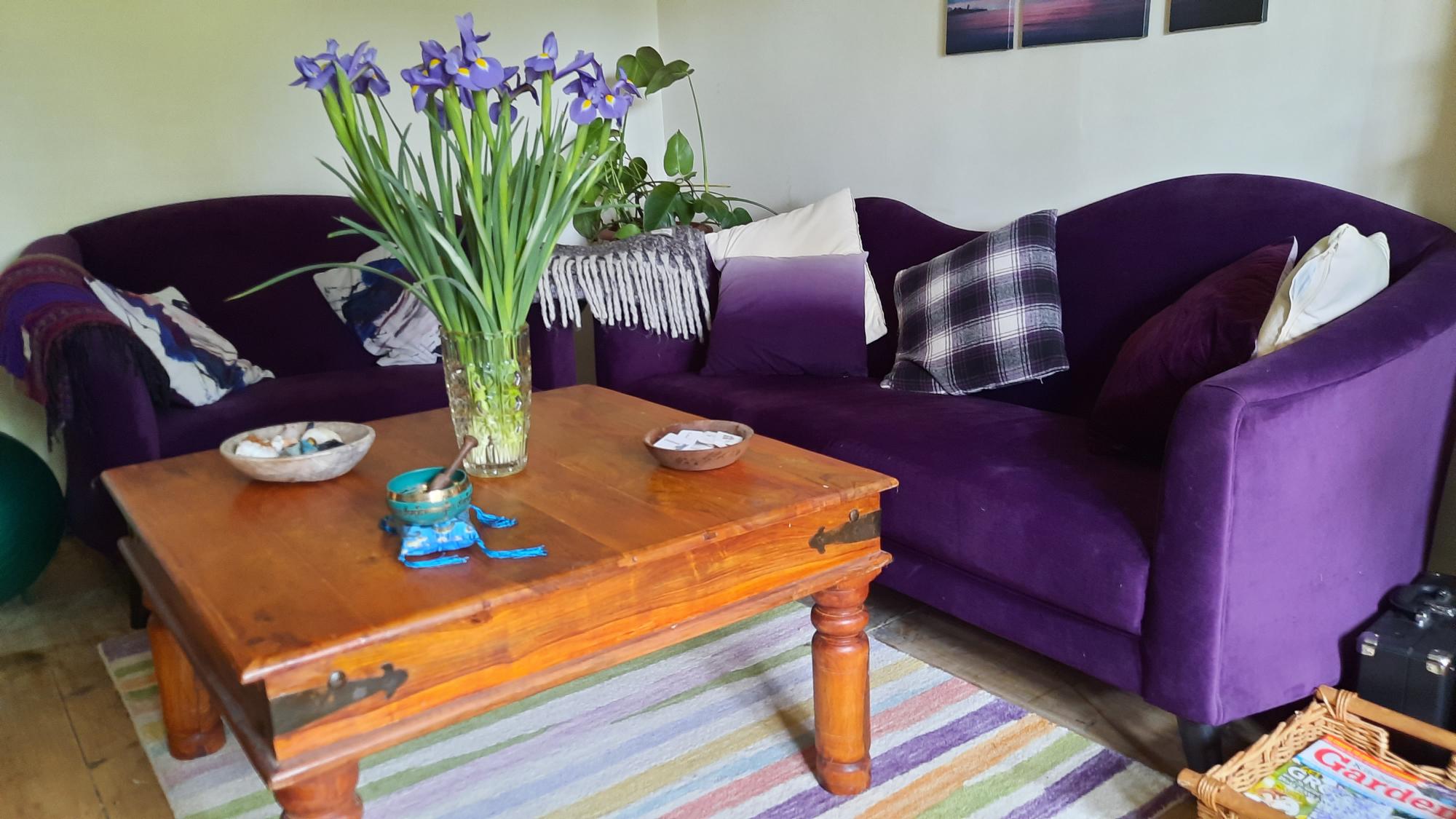
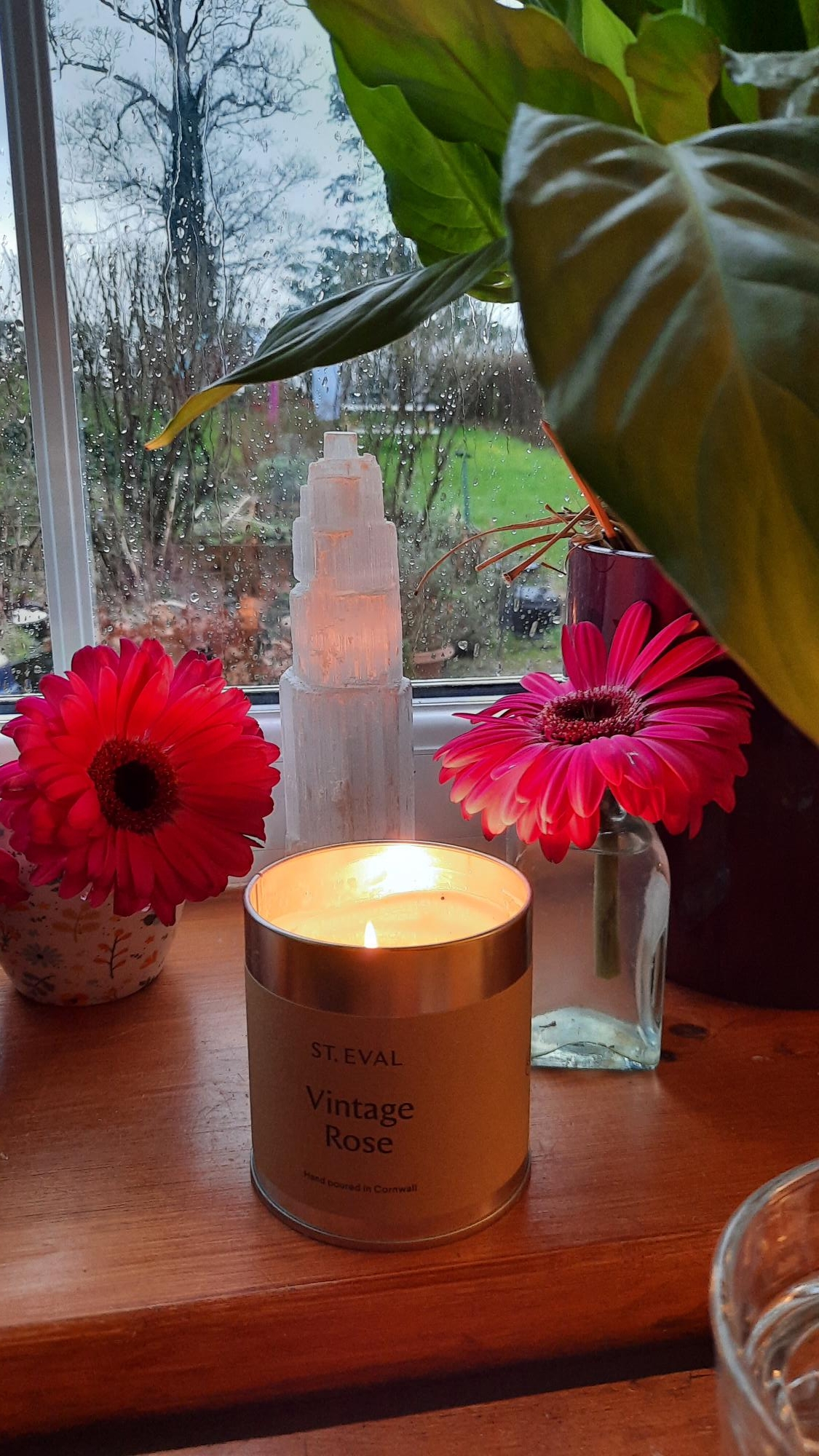
I am blessed to primarily work from home. I sit by a window as I work so I can ‘draw’ in the nature that’s outside. I have flowers beside me, and an assortment of crystals. I may have Mozart on the record player and incense burning. Even if I worked away in an office, I’d find ways to bring in elements of beauty. This is nourishment. It aligns us to our optimal self.
It’s easy for things like housework (or in my case, paperwork!) to become overwhelming. Taking some time to eliminate these, or keep them at manageable levels, only serves to enhance our well-being. There are countless articles, blogs and books on the power of decluttering. It is therapeutic and cathartic. Simplicity is a value which allows us to see the truth of our lives.
The Seventh Way
It is said that we become a composite of the five people we hang out with the most. This becomes particularly challenging if those people are emotionally draining, negative, pessimists, gossipers and so on.
Energetically,
we are ‘swimming’ in the energy field
of the people we live with or spend the most time around.
Consider that this can be affecting you and your health and well-being, and reflect on how you might remedy this. Perhaps it is about alerting them to their mindset or explaining how their negativity is impacting you. You can’t change them, of course, but it is important to speak your truth quietly and clearly. As we change, our relationships change.
It can take a huge amount of energy to maintain our high vibrational energy when we’re surrounded by people who are emitting a negative frequency.
Making the conscious decision to choose high-vibration living means that you start making different choices. This is empowering and authentic, and ensures that you’re recalibrating in an optimal way. Consistently making these choices creates a brand new life. It doesn’t mean you’ll never feel sad, angry, depressed and so on. It does mean that you’ll make choices to choose different feelings sooner rather than later.
Veronika Robinson is an author based in Cumbria, and is currently writing a book on the liminal space of menopause, marriage and the psycho-spiritual changes as we recalibrate. She is the author of Cycle to the Moon; Celebrating The Menstrual Trinity: Menarche, Menstruation, Menopause, and an assortment of other books. She facilitates workshops for women, including the menstrual trinity; and as a celebrant creates and officiates Sagesse and Crone ceremonies. Veronika is a psychological astrologer, and weaves this into her work. www.veronikarobinson.com
The years of peri-menopause and menopause are often shrouded in words like: hot flush, weight gain, and an assortment of other physical symptoms. However, the physical body is not the only way we express and experience ‘the change’.
Increasingly, women are finding that there are a host of inner changes happening too, and one of those is in relation to self, identity and how we are in our marriage (significant relationship). Finding the balance between self and relationship can be a time of great soul searching.
If you’d like to take part in a creative three-hour workshop (via Zoom) on this topic, please get in touch for a booking form. Alternatively, if you’re interested in contributing to my research on this, you’re welcome to do so. Your contributions will be treated confidentially.
Marriage, Menopause and You WORKSHOP
9am to Noon (UK time)
Saturday 4th December 2021
A three-hour workshop exploring the psycho-spiritual changes of menopause, and the balance between self and relationship.
Through writing, symbolism, creativity, and reflection, this is an opportunity to take a deeper look at your internal landscape while in the company and support of other women.
Facilitated by Veronika Sophia Robinson
Via Zoom.
£15 per person
Places limited. Booking essential.
Veronika Robinson is the author of Cycle to the Moon; Celebrating The Menstrual Trinity: Menarche, Menstruation, Menopause, and an assortment of other books. She facilitates workshops for women, including the menstrual trinity; and as a celebrant creates all manner of ceremonies, including weddings, parting of the ways, sagesse and crone ceremonies. Veronika is a psychological astrologer, and weaves deep-level symbolism into her work.
https://veronikarobinson.com/wp-content/uploads/2018/10/IMG_20181005_190326_823_resized_20181029_023618894.jpg21601728Veronika Sophia Robinsonhttps://veronikarobinson.com/wp-content/uploads/2025/04/Updated-logo-colour.pngVeronika Sophia Robinson2021-10-06 13:43:222021-10-09 11:03:03Marriage, Menopause and You: the psycho-spiritual changes of the hormonal creative fire