Posts

Perhaps it’s because of my work as a funeral celebrant or because of the different times I’ve walked the path of grief, but I find the unsolicited serving up of platitudes can demean a fellow human’s feelings.

Platitudes are the words we wear when we don’t know what else to say. Spiritually, platitudes are a paradox. On one hand, they act as thought-terminating clichés that bypass empathy and silence the suffering of the moment. They serve the speaker of those words, not the recipient. The ego helps us to ward off the uncomfortable. Retreating from someone else’s pain takes us away from being present.


We speak platitudes to hide the raw edges of grief or pain. And yet, beneath their veneer lies a universal truth—a desperate human desire to connect.

We offer them like sacred talismans:

Everything happens for a reason
Time heals all wounds
It is what it is

Perhaps platitudes were formed on the bedrock of collective human wisdom or even survival? We repeat them because we sense the seed of the universal human stories within them. The desire to connect with another isn’t the problem, of course, it’s the mindless recitation of words that don’t help another to heal.

To walk a mindful path, let us swap the easy answer for the heavy, beautiful act of sitting with someone in the dark. Unsure how?


Instead of saying They are in a better place perhaps you could say:

I am holding space

for the massive absence left behind.


Everything happens for a reason dismisses a person’s pain. How about saying:

This is deeply unfair,

and you do not have to find a lesson in it.


God doesn’t give you anything you can’t handle does not help a person. Why not support them with:

You shouldn’t have to be this strong right now.

I am here in the weakness with you.


When someone’s future is uncertain, you might be tempted to soothe things over with words like: It will all work out in the end. Or, you could enter into presence and say:

I don’t know how this unfolds,

but you will not walk through the unknown alone.


If you find yourself in the company of someone who is suffering deeply, instead of telling them to be positive or cheer up or look on the bright side, you could say:

I am ready to sit with you in the dark

for as long as it takes.

Sent with warmth and compassion from my writing desk in the wild fells of Cumbria,

Veronika Sophia Robinson

Author, Novelist, & Weaver of Word Medicine
🤍 🤍 🤍
If this blog touched your heart, you are warmly invited to step further into my literary sanctuary. Explore the complete collection of fiction and non-fiction books at Starflower Press, or discover the living map of your soul with a personal reading at The Oracle. My celebrant training and celebrant masterclasses can be found at Heart-led Celebrants.

At those times when our outer life accurately reflects our inner terrain, we experience spiritual grace. This may be seen when our days claim synchronous happenings.

sebastianunrau


People and events turn up at just the right time, as if by chance. We see signs and symbols everywhere we turn. These seeming coincidences are, in fact, confirmation from the universe that you are in alignment. Smile, and cherish each one.


FredViljoen

“Your daily life is your temple and your religion.”

Kahlil Gibran

Yesterday I asked myself: “Who is the most spiritual person you know?” I was rather surprised when no obvious person came to me, but had to laugh out loud when I saw Azaria’s face. For those of you who don’t know Azaria, she’s the main character in my novel, Sisters of the Silver Moon.

Azaria

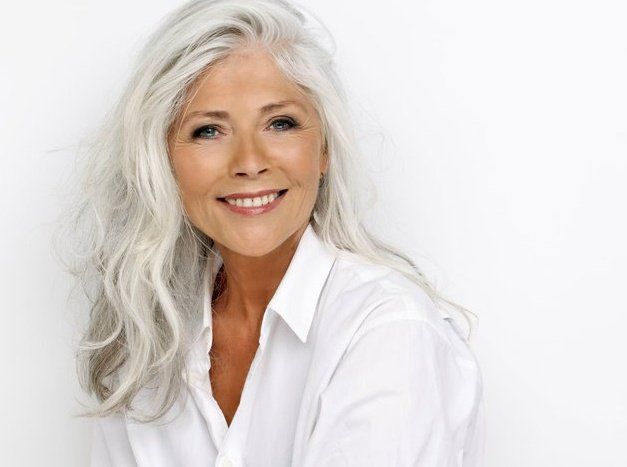
I modelled Azaria’s physical characteristics on this lovely Danish hairdresser. I adore her open face.

I pondered our cultural notion of spirituality, and also why I’ve heard from women who say they want ‘to be like Azaria’. I was intrigued, but not surprised, that a fictional character was held up as an archetype of  ‘spirituality in action’.

As a writer, I adored watching Azaria unfold. She’s 56 years old, and has four adult daughters. Her husband died some years ago in a storm. She lives in an old homestead in the mountains of Colorado, and spends her days tending her beehives and growing/harvesting herbs. Without doubt, she’s well-loved and respected in her community. But she’s not perfect, and that’s part of her charm.

The more I think about this character (and certainly where she’s heading in the sequel, Behind Closed Doors) I can understand her magnetism. Although she’s a fictional character, she does represent something to which we can aspire. And isn’t it interesting, when you look at the Latin roots of words, to see aspire and spiritual both containing ‘spir’? As a metaphysician, I also see it as ‘to breathe in life’. Indeed, to breathe in the Divine.

Perhaps you or someone you know meditates regularly or goes to church. Maybe they or someone else burns incense or keeps a gratitude journal. Maybe their temple is Mother Nature herself. Perhaps they’re avid readers of spiritual or person-growth books or the Bible. Maybe they regularly consult divination cards? Do these things make us spiritual? No, no more than hitting a piano key makes you a pianist. All these things, and more, may well be integral to our daily practice, but spirituality is about the outer experiences of our life reflecting and being congruent with our inner values.

So if we breathe in the Divine, then surely we must breathe out the Divine, too?

What are our values? Examples include: independence, adventure, family, beauty, kindness, justice, love, wisdom, truth, compassion, trust, fidelity, power, healing, leadership, knowledge, intimacy, integrity, growth, humility, dignity, food, friendship, community, creativity, etc.

Do our interactions with friends, family, colleagues and strangers mirror our inner values?


lilacmoon

The character Azaria shows us that everyday we are learning, and every day of our lives is an opportunity to be congruent. When our outer life truly reflects our inner values, then life has a way of flowing harmoniously. And when Fate brings unexpected life-changing events our way, we do have the spiritual tools within to ‘breathe in the Divine’. More than anything, I believe she teaches us that when we love and accept ourselves, then loving others is easy. And isn’t that at the heart of spirituality? To recognise that we are all one? All drops of the same ocean?

What does spirituality mean to you?

Love, Veronika xxxx

#my500words

SL5png

Would you like to write for Starflower Living magazine?

Issue 6 themes for the New Moon in Sagittarius (due date, November 2nd): optimism, faith, adventure, freedom, truth, travel, publishing, horses, expansion, higher learning, Nature, conscience, friendliness, universities, philosophy. Health: thighs, sciatica, liver, hips.

Issue 7 themes for the New Moon in Capricorn (due date, December 1st): self-discipline, commitment, public image, aging, success, reaching goals, financial security, ambition, respect, fathers, and tradition. Health: knees, skin, bones, joints, gall bladder/stones, arthritis.

We are looking for articles which make people think, and that will inspire, take them out of their comfort zone.

Love, Veronika


SLpromopng