There is a unique vulnerability in releasing a new book into the world. You send your words out from the writing desk, hoping they find their way to the ears and hearts of those who need them most. My heart is full of gratitude as I share that Write That Wedding Script: A Masterclass in Crafting Ceremonies has officially become an Amazon Bestseller!
When I began writing this guide, my aim was to provide a deeper exploration of our craft for the wedding-celebrant community. Having spent over thirty years officiating international weddings, I’ve learned that a ceremony is a living piece of art. Being a celebrant requires us to step into our role as original wordsmiths, infusing soul and intention into every syllable.
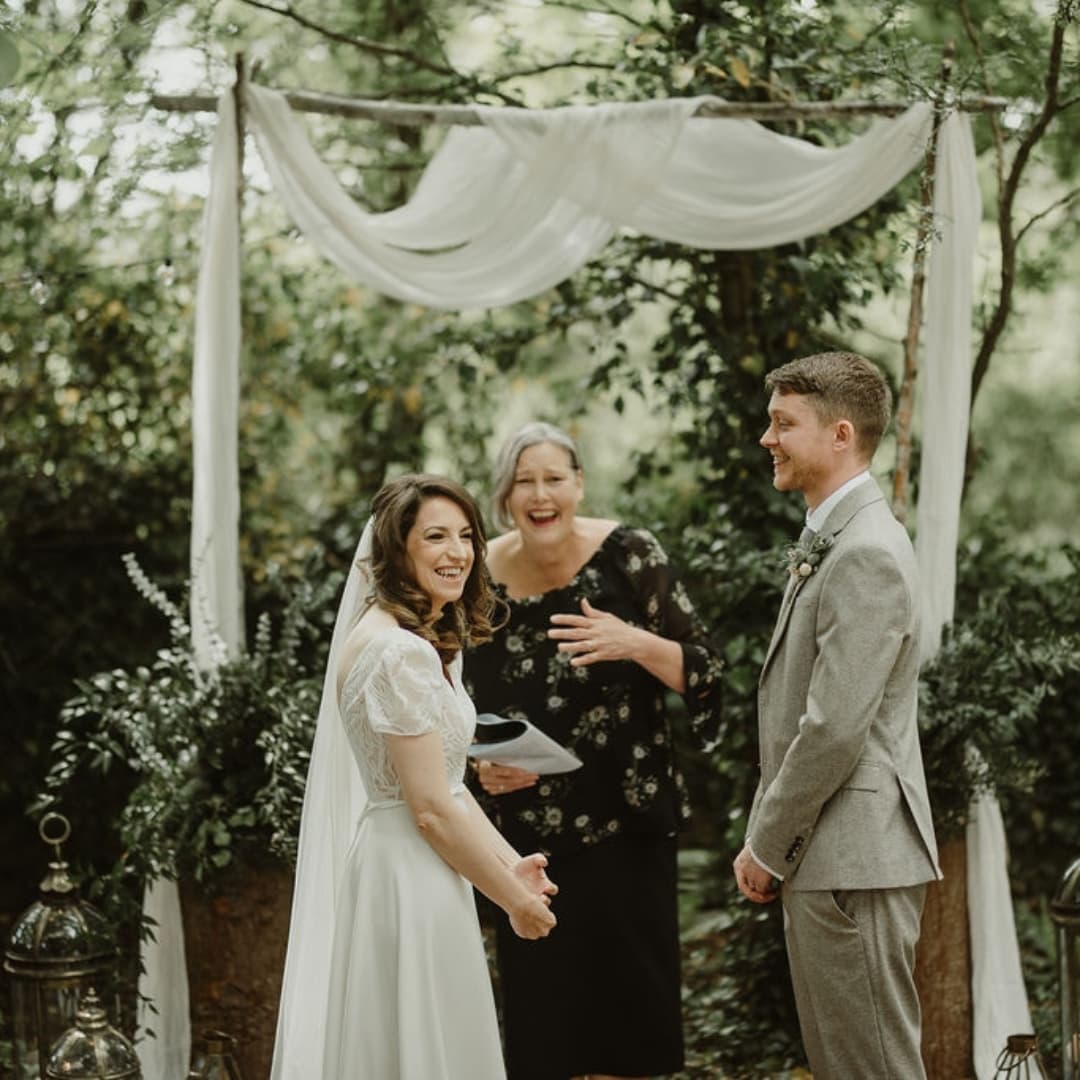
Sarah and Ned’s beautiful wedding at New House Farm, Cumbria
To see this book resonate so quickly tells me that celebrants, officiants, and independent writers are ready to push past comfortable boundaries and explore the true power of language.
Honouring the Voice of the Celebrant
Whether you’re an established professional wedding celebrant, a celebrant in training, or a family member chosen to speak for a loved one, Write That Wedding Script was created to unlock your innate creative power.
This guide is an invitation to write with bravery and presence. As a masterclass, it will help you:
Deconstruct expected structures to capture the authentic, living rhythm of a couple.
Refine your wordsmithing skills, choosing language that carries emotional resonance.
Step confidently into diverse spaces, whether creating earth-centric rituals, spiritual blessings, or humanist celebrations.
Emily and Ben’s gorgeous woodland wedding at Low Hall The Lakes.
The Convergence of Three Journeys
This milestone carries an extra layer of joy because it marks a trilogy of chart-topping successes this season. I’ve always viewed my writing as a form of word medicine, a way to uncover the hidden shimmer of the human soul. Whether I’m writing magical feminism fiction or practical non-fiction, the root intention remains the same.
Write That Wedding Script now sits on the bestseller list alongside two other recent works that are incredibly close to my heart:
Under The Starflower: A Book of Blessings: A multi-faith collection of original spoken-word blessings written to offer comfort and a healing balm during end-of-life ceremonies.
Thank you to my artists: Sarah Esau, Philippa Mulvany and Laura Whalen.
Thank You to My Readers
To everyone who has ordered a copy, left a thoughtful review, or shared these titles within your own circles, thank you. Your support allows me to keep creating independent work from a place of truth and purpose.
If you want to explore these pages for yourself, signed copies of all three books are available through Starflower Press.
Here’s to the magic of the written word, and to the stories we choose to tell.
https://veronikarobinson.com/wp-content/uploads/2026/09/wildflowers.jpg13501080Veronika Sophia Robinsonhttps://veronikarobinson.com/wp-content/uploads/2026/08/Updated-logo-colour_26-300x138.pngVeronika Sophia Robinson2026-10-03 10:34:412026-10-03 10:34:41Crafting the Spoken Word: Reflecting on a Beautiful Season of Creative Abundance
Well, the Universe answered loudly this weekend. Thanks to an incredible outpouring of love, Little Black Apples flew straight into the Amazon Top 50, hitting #41 in Emotions Self-Help and #62 in Spiritual Self-Help! A whopping five thousand books a day are published on Amazon.
To top it all off, it is currently sitting at a perfect 5.0-star rating with beautiful, heartfelt reviews. To say I am grateful would be a massive understatement. My heart is absolutely overflowing.
The Story Behind the Apples
If you’ve been following my writing journey, you know that I don’t shy away from the darker seasons of life. Little Black Apples is a book born from the storms. It’s a non-fiction, self-help guide written specifically for women who are navigating their own wild terrain of healing, trauma recovery, and self-discovery.
But it isn’t just words. To bring the magic fully to life, the book features whimsical, vibrant full-colour illustrations throughout, creating a visual sanctuary where art and word medicine meet. This is a reminder that even when the storms strip us bare, there is an earthy wisdom waiting to be gathered from the dark.
One reviewer said: “The illustrations are beautifully hand crafted and inspire calm, curiosity and an interesting sense of safety. They really match the content of each chapter. I am a psychotherapist and I will definitely recommend this book to my clients.”
A Community of Magic
Hitting a bestseller list is lovely, but what matters infinitely more to me is why it hit those charts. It happened because of you.
In a world where algorithms dominate, this success belongs entirely to the community of women, seekers, and soulful readers who picked up a copy, shared it with a friend, or took the time to leave a beautiful review on launch day. You proved that there is a deep hunger for intuitive, Nature-based wisdom and authentic emotional healing.
If you haven’t stepped into the world of Little Black Apples yet, it is officially available now in print and Kindle formats. Signed copies from Starflower Press.
Thank you, from the bottom of my heart, for walking this path with me, for celebrating the milestones, and for finding the sweetness in the shadow.
https://veronikarobinson.com/wp-content/uploads/2026/08/camilo-jimenez-XwZvolvaRRc-unsplash.jpg12801920Veronika Sophia Robinsonhttps://veronikarobinson.com/wp-content/uploads/2026/08/Updated-logo-colour_26-300x138.pngVeronika Sophia Robinson2026-09-13 19:44:512026-09-13 19:44:51Finding the Sweetness in the Shadow: Little Black Apples is an Amazon Bestseller!
Navigating the landscape of modern literature requires a clear understanding of genre boundaries. Writers often use terms interchangeably when dealing with the supernatural, yet subtle distinctions alter the entire core of a book. Two styles that frequently cause confusion are Magical Realism and Magical Feminism. While they share a foundational reliance on the extraordinary, their ultimate aims, thematic focuses, and narrative driving forces differ significantly.
Understanding these boundaries allows authors to approach their manuscripts with greater intent and clarity.
The Foundations of Magical Realism
Magical Realism developed largely as a response to political upheaval and cultural shifts, particularly in Latin America. This genre presents a world where the surreal coexists with the mundane without causing alarm. Authors use these strange elements to comment on colonisation, war, and the absurdity of authoritarian regimes.
The narrative voice treats a levitating priest or a sudden shower of flowers as standard occurrences. The magic functions as a collective cultural reality. This belongs to the community as a whole rather than serving a specific personal awakening.
The Evolution of Magical Feminism
Magical Feminism emerges from this tradition but refocuses the lens entirely. The genre shifts the spotlight away from broad societal structures to examine the specific lived experiences of women. The magic in these stories frequently connects to female biology, childbirth, aging, and a visceral relationship with the natural world.
Supernatural occurrences, such as a woman commanding the weather or communicating with unborn generations, act as tools for liberation. This viewpoint validates the intuitive knowledge that traditional societies have historically dismissed or punished. The narrative centres on dismantling patriarchal structures and reclaiming personal power.
Shaping Your Narrative
For writers sitting at the desk, deciding between these paths changes how you build your world. If your goal is to critique historical events or explore regional folklore, your manuscript sits in Magical Realism. If your focus centres on the internal reclamation of the female, you are writing Magical Feminism.
In many conventional fantasy traditions, magical objects are rare artefacts forged in remote fires or locked away in distant vaults. Swords, rings, and crowns carry the fate of kingdoms on their sharp edges. Within the realm of Magical Feminism, however, the extraordinary resides in the domestic, the discarded, and the everyday. Objects traditionally associated with women’s work, domestic spaces, and the home become the primary objects for supernatural power. When writing these narratives, items like handmade soaps, vintage buttons, stitched dolls, and kitchen utensils are never mere background props. They’re active participants in the story, holding memories, directing fates, and anchoring female legacy. Grounding the supernatural in mundane items allows writers to challenge traditional ideas of where power lives, elevating the everyday world into a sacred space.
Botanical Memory and the Alchemy of Craft
When magic is infused into items created by hand, the precise origin of the natural components becomes vital to the narrative. In stories centred on craft, such as soapmaking, the botanical ingredients carry the specific energy of the earth where they grew. They are not inert powders or fragrances. They are living archives of the soil. This is one of the reasons I enjoy bringing botanicals into my writing.
The location where a plant grows dictates the spirit of the magic it holds. Lavender harvested from an abandoned, sun-drenched cottage courtyard carries a completely different intent to lavender grown near a busy crossroads or a historic battlefield. A bar of soap infused with oils from herbs gathered along a mist-shrouded riverbank might wash away years of accumulated grief, whilst botanicals plucked from a sheer, wind-battered cliffside might instil an untamed courage in the person who uses it to bathe.
The process of blending, boiling, and curing transforms these natural elements into physical spells. The soapmaker acts as a bridge, taking the quiet magic of the earth and refining it into a tangible tool. As the soap lathers against the skin, the magic dissolves into the pores, changing the physical and emotional state of whoever touches it. Authors can lean heavily into the sensory details of this craft, describing the thick steam, the rich textures, and the vibrant colours of the oils to show that magic is a visceral, tactile reality.
The Domestic Archive: Memory in the Smallest Things
Items found within the home often serve as quiet archives of human experience. Small, overlooked possessions gather the emotional residue of the hands that held them, turning a simple container into a rich repository of history. A grandmother’s button tin is a perfect example of this phenomenon, serving as a portal to the past.
A collection of mismatched buttons, bone bobbins, threads, and brass thimbles can hold an entire family lineage within its rusty metal walls. Each item carries the exact imprint of a specific moment. A mother’s quiet anxiety whilst mending a child’s coat during a harsh Winter lingers in the groove of a bone bobbin. A daughter’s private joy whilst sewing a secret garments stays locked within the twist of a silken thread. The smooth surface of a silver thimble remembers the pressure of fingers that worked long after the candles had burned down to pools of wax.
In Magical Feminism, these items don’t remain silent. They ‘tell stories’ to those who know how to listen with their hands. When the protagonist reaches into the tin, the objects hum against her fingertips, releasing their hidden narratives. A protagonist holding an old wooden bobbin might suddenly perceive the cadence of an ancestor’s voice, or she might feel the precise gravity of a secret kept a century ago. This narrative mechanism allows characters to commune with their ancestors through physical touch, bypassing conventional historical records to access the true, unvarnished experiences of the women who came before them.
Dolls and the Unspoken Self
Dolls hold a unique, potent position in the landscape of magical objects. Created in the image of the human form, they frequently function as extensions of the soul, protective guardians, or silent witnesses to things that cannot be spoken aloud in polite society.
A dollmaker doesn’t just sew fabric. She infuses the figure with a spark of intent, breathing life into the stitches. The doll can act as a spiritual shield, absorbing the malice or danger intended for its owner, showing physical wear like cracks or stains whilst the protagonist remains unharmed. Alternatively, a doll can hold a fragment of a woman’s voice or identity when she has been forced into silence by her circumstances. In writing my novel, The Irish Dollmaker, the dolls are a portal to the past.
Because dolls are often viewed by patriarchal societies as mere playthings, childhood trinkets, or simple decorations, their power remains hidden in plain sight. 😉 This makes them exceptionally clever tools for narrative tension. They become covert vehicles of resistance, holding a potent magic that operates entirely beneath the notice of oppressors. A doll sitting quietly on a shelf might be turning the tides of a conflict, its eyes seeing far into the future whilst the men in the room ignore the doll.
The Magic of the Routine: Spoons and Mirrors
Even the most utilitarian household items carry mystical potential when used with true intent. Everyday routines become sacred rituals when handled by a protagonist who understands their inherent power, transforming the home into a place of quiet alchemy.
The simple act of preparing food or medicine becomes an extraordinary process when a wooden stirring spoon is introduced. A wooden spoon, having absorbed decades of nourishment, family history, and hearth heat, can shift the properties of whatever it touches. The spoon can infuse a simple stew with restorative healing properties, or it can cast a subtle glamour over a broth to change the thoughts of those who sit down to eat. The grain of the wood remembers every meal, every conversation shared around the stove, and every tear dropped into the pot, making it a tool of comfort and protection.
Mirrors, too, transcend their mundane purpose in this genre. Rather than reflecting physical appearance or societal expectations of beauty, a magical mirror might show the true, unvarnished state of the spirit. Perhaps it will reveal a hidden truth about the past, uncover a deception, or provide a fleeting glimpse of a parallel path that the protagonist could have taken. The mirror strips away the masks that women are forced to wear, forcing the viewer to confront her authentic self and her own wild power. My current writing project, A Change To Remember, uses mirrors to show the characters their true self.
For writers, treating these objects with reverence elevates the domestic sphere. They demonstrate that a woman’s workspace—whether it is a busy soap kitchen, a quiet sewing corner, or a roaring hearth—is a space of immense, transformative authority. By focusing on these ordinary items, you show that magic does not belong to the elite. No, no, no. Magic belongs to the hands that create, mend, and nurture.
Veronika Sophia Robinson has long lived between this world and the Other Side. She has found her true writerly home in the genre of Magical Feminism. You can find her books The Soapmaker and Grandmother’s Button Tin under the Moonlight and Motif imprint at Starflower Press (alongside her full range of multi-genre books). Look out for her upcoming titles in Magical Feminism: The Irish Dollmaker, and A Change To Remember.
The Body as a Compass
Within the realm of Magical Feminism, the female body acts as far more than a physical vessel experiencing the world. Standard literary traditions often separate the mind from the flesh, positioning logic as the ultimate guide whilst treating physical sensations as mere reactions. Magical Feminism subverts this approach by treating the protagonist’s body as a literal and spiritual compass. In these narratives, a woman doesn’t rely solely on external maps, social conventions, or intellectual analysis to find her path. Instead, her skin, her blood, and her bones hold an intelligence that directs her towards truth, survival, and liberation.
Understanding this somatic guidance changes how writers develop character arcs and build tension within magical-feminism fiction.
The Geography of Sensation
When a protagonist uses her body as a compass, the landscape of the narrative alters. The physical form becomes a highly sensitive instrument that registers shifts in the environment, hidden dangers, and ancestral truths before the conscious mind can process them. A sudden chill in the fingertips might signal a betrayal brewing in a nearby village, whilst a steady warmth in the chest might confirm that a stranger is trustworthy.
This guidance operates on a level of certain reality. The narrative voice treats these physical reactions not as flighty whims, but as reliable data. When the soles of a woman’s feet ache whilst walking down a specific path, the reader understands that the ground itself is warning her away. The body becomes an active translator of the unseen world, turning magical currents into tangible, undeniable physical feedback.
Reclaiming Institutionalised Instincts
Historically, patriarchal structures have dismissed women’s physical experiences, labelling intuitive bodily knowledge as hysteria, weakness, or oversensitivity. Magical Feminism reclaims these traits, transforming them into reliable tools of navigation. The protagonist’s body remembers what history books have erased or suppressed.
For instance, a character might feel a tightening in her throat when entering a church built over an ancient, forgotten well. Her conscious intellect knows nothing of the history, yet her body recognises the desecration of the sacred waters. By following the pull in her throat, she uncovers the truth, unearthing both the history of the land and her own hidden heritage. The body refuses to be gaslit by societal narratives. The protagonist’s body acts as a truth-teller in a world that demands female compliance.
The Lineage of the Blood
This somatic orientation connects the protagonist to a cyclical, generational timeline. The compass does not just point north; it points backward into ancestry and forward into future generations. A woman’s womb, her heartbeat, and the rhythm of her breath sync with the movements of the Moon and the historical struggles of her forebears.
When facing a critical choice, the protagonist might feel her grandmother’s hands steadying her wrists, or she might experience a sudden taste of copper on her tongue that mirrors a trial faced by an ancestor centuries prior. This guidance ensures that her journey is never solitary. Her body carries the accumulated wisdom of every woman who came before her, providing a blueprint for survival that cannot be stolen or subverted by external forces.
Writing the Somatic Narrative
For authors crafting these stories, utilising the body as a compass requires a deep commitment to sensory language. Writers must move beyond simple descriptions of sight and sound, focusing instead on visceral internal landscape. How does the protagonist register a change in the wind? Where does she feel the weight of an incoming storm, or the electric prickle of an approaching spell?
By grounding the magic within the flesh, the supernatural elements lose their ethereal, disconnected quality. The magic becomes rooted in truth and linked to female autonomy. The protagonist becomes self-determining, guided by an internal needle that always points toward her own north star.
Veronika Sophia Robinson is an Australian multi-genre author living in rural Cumbria, England. You can find her magical feminism novels under the Moonlight and Motif imprint at Starflower Press.
The Omniscient Voice: Unleashing the Infinite in Magical Feminism
In the landscape of Magical Feminism, stories breathe through a unique lens. The genre merges the concrete struggles of female identity with the untamed, mystical currents of the natural and spiritual worlds. When crafting these narratives, the choice of narrative perspective dictates the entire depth of the magic. While close first-person viewpoints offer immediate intimacy, the omniscient voice unlocks an expansive power ideally suited for this specific literary realm. An all-knowing narrator elevates Magical Feminism from a simple personal journey into a mythic, timeless account.
Linking the Internal with the Collective Unconscious
Magical Feminism often deals with ancestral memory, intuition, and the shared thread of female experience. A first-person narrative confines the magic to one pair of eyes. The omniscient voice, however, floats above and drifts within.
Fluid Perspective:The narrator moves seamlessly from the quiet ache of a woman baking bread in her kitchen to the ancient consciousness of the soil beneath her floorboards. Unified Narrative: This perspective allows the writer to connect an individual character’s awakening directly to the broader movements of Nature and history.
By stepping back, you reveal that a character’s personal transformation is part of a larger, systemic shift in the Universe.
Validating the Extraordinary Without Apology
When a character speaks in the first person, their encounters with the surreal—like talking flora or prophetic dreams—can sometimes read as hallucinations or subjective experiences. The omniscient narrator acts as an objective authority. Inherent Truth:When an all-knowing voice states that the river wept or that a woman’s shadow detached to fight a battle for her, the reader accepts it as fact. Normative Magic: The magic ceases to be a bizarre anomaly. It becomes a fundamental law of the story’s world, holding the same gravitas as a kitchen table or a rainy afternoon.
This authoritative grounding allows the feminist themes to stand firm. The supernatural elements are not flights of fancy. They are real, formidable extensions of female power.
Embracing Cyclical Time
Linear time often feels restrictive in stories rooted in magic and feminism. Women’s lineages are cyclical, tied to seasons, generations, and rebirth.
The omniscient perspective handles non-linear timelines with ease. Why? Because it can look at a young girl in the present moment whilst simultaneously referencing the grandmother who walked the same path a century ago. This viewpoint shows the reader the seeds of the past, the blooming of the present, and the harvest of the future all at once.
Elevating Your Craft
Choosing the omniscient voice requires trust in your narrative authority. This view demands that you step into the role of the storyteller as the keeper of the lore. If you’re a writer in this genre, try experimenting with widening your lens. Allow your narrator to know the secrets of the wind, the hidden desires of your antagonist, and the quiet magic waiting in your protagonist’s hands.
Even if you never pick up a pen, try stepping into the omniscient viewpoint of your own life: look down upon yourself with grace, and see your quietest routines, your deepest heartaches, and the invisible threads of your ancestors not as random fragments, but as a breathtaking, sacred myth currently in bloom
For centuries, storytelling has been dominated by a singular, rigid structure: the linear quest. We’re taught to expect a solitary hero who leaves home, conquers an external enemy, and returns triumphant. This formula drives thriller novels, epic fantasy, and classic sci-fi alike. Yet, for writers of magical feminism, this traditional framework often feels restrictive. When we weave ordinary life with the supernatural to explore women’s inner worlds, the old formulas break down. The plot must bend to accommodate a different kind of truth. Distinct structural shifts separate magical feminism from conventional genres.
Recently, someone commented on my chapters being almost ‘stand alone’ and not continuing chronologically. For someone new to the genre of magical feminism, it might seem odd. Standard fiction relies heavily on a strict timeline where one event leads directly to the next. Magical feminism rejects this linear constraint, opting instead for cyclical or ancestral time. The past, present, and future breathe together in the same room. A grandmother’s childhood trauma might manifest physically in her granddaughter’s kitchen, disrupting the ticking of the clock. This way of writing allows us to show that healing is rarely a straight line; it is a spiral that loops back to ancestral roots.
The climax of a typical adventure novel usually features a final showdown between a protagonist and a villain. Magical feminism pulls away from this isolated struggle. Instead, the narrative tension builds toward a moment of shared realisation. Resolution comes when women share their hidden truths. They find resolution or peace when they pool their inherited wisdom. Sometimes, it is found when they unite to break a long-standing generational curse. The narrative arc values community over individual conquest.
Epic genres have characters who travel to distant worlds or massive battlefields to find high stakes. Magical feminism locates the epic within the boundaries of everyday life. The kitchen table, the garden patch, and the birthing room become the arenas where cosmic forces play out. Everyday acts like baking bread, stitching fabric, or tending soil carry profound narrative weight. By centring the plot here, the genre honours spaces that society has historically sidelined.
In fantasy and science fiction, characters spend significant time learning the rules of magic, constructing lore, or seeking logical explanations for the impossible. Magical feminism bypasses these explanations completely. When a character converses with a ghost or levitates above her bed or (in the case of my novel, Grandmother’s Button Tin, hears stories through buttons, bobbins, thimbles and thread; or The Soapmaker, the botanical ingredients, loved ones who’ve passed over), the narrative accepts this as a natural layer of reality. The characters don’t pause the story to investigate the mechanics of the miracle. This allows the momentum of the plot to focus on emotional truth rather than world-building mechanics.
A traditional ending often delivers a neat conclusion, such as a defeated enemy or a perfect marriage. Magical feminism favours endings rooted in endurance and metamorphosis. Sometimes, the oppressive forces in the outside world remain at the final page. The victory lies in the internal autonomy the characters have claimed or reclaimed. Survival itself becomes the ultimate resolution.
Traditional genre fiction frequently builds authority through ancient texts, formal prophecies, and masculine systems of law. Magical feminism shifts this narrative authority into oral histories, bodily intuition, and whispered folklore. Spells are woven through stories, incantations, recipes, and nursery rhymes passed down through maternal lines. This structural shift allows characters to reclaim their voices, reshaping the wider world through the language of the marginalised.
Standard narratives tend to compartmentalise human experience, separating physical discomfort from spiritual enlightenment. Magical feminism weaves these elements together, allowing the messiness of female biology to sit comfortably alongside the sublime. Blood, childbirth, and aging are treated as sites of profound magical potential rather than things to be hidden away. This structural honesty grounds the supernatural, making the surreal elements feel deeply connected to the flesh.
As writers, embracing these styles requires a willingness to unlearn the rigid rules of conventional commercial fiction. We must trust that a reader can find deep satisfaction in a story that prioritises emotional evolution over physical combat. By stepping away from the traditional hero’s journey, we open up a rich, expansive territory where magic and truth walk hand in hand.
When readers think of speculative fiction, minds often drift to epic fantasy realms or urban sorcery. However, a distinct literary space exists where enchantment weaves directly into the fabric of daily life. This is magical feminism. Unlike genres that use magic as an escape from reality, magical feminism serves as a direct critique of patriarchy. The genre uses the extraordinary to expose, challenge and dismantle the systems that suppress women. By centring the female experience, ancestral lineage and the reclamation of personal power, these stories transform everyday domestic reality into a site of active resistance.
Here are the defining qualities of a magical feminism novel, illustrated by how these elements confront real-world injustice and institutional control.
A Grounded, Rural Setting
The landscape in these novels is rarely a passive backdrop for the plot. Stories frequently unfold in rural locations, ancient villages, coastal landscapes or isolated cottages. These environments provide a vital connection to Nature, the changing seasons and cycles of growth. The isolation of a rural environment allows characters to live outside the dominant, urbanised structures of modern society. This separation creates a space where the boundary between the ordinary and the extraordinary blurs, allowing women to find sanctuary away from patriarchal surveillance. In the countryside, away from institutional eyes, characters can develop their gifts, gather in community/sisterhood, and establish a safe haven where healing can take place on their own terms.
Enchantment in Everyday Items
The magic in these novels is domestic, tactile, and woven into mundane objects. This power resides within household items, transforming ordinary tools into vessels of strength, memory and agency.
In my novel, The Soapmaker, this manifests through the craft of soapmaking, where the bars of soap hold distinct magical qualities when used by the characters. This supernatural element serves to critique the extreme control, isolation and psychological conditioning enforced by a strict religious group, the Jehovah’s Witnesses. By elevating soap and domesticity, the genre honours the historical spaces managed by women, turning the tools of daily routine into instruments of liberation and self-determination.
Inherited Magic and Ancestral Lineage
Magic is usually inherited, passing down through generations of women as a physical manifestation of intuition, resilience and shared history. This inheritance bypasses patriarchal lineages, creating an unbroken chain of female wisdom.
In my current work in progress, The Irish Dollmaker, this inheritance takes the form of clair-senses. The protagonist experiences heightened psychic knowing and sensory awareness through the dolls she creates. This magical ability acts as a tool to uncover buried truths, offering a searing critique of the Irish Mother and Baby Homes and the systemic abuse perpetrated by the church. The magic connects daughters, mothers and grandmothers, allowing them to heal historical trauma and speak for those who were silenced by powerful institutions.
Confronting the Suppression of Women and Girls
Magical feminism uses the supernatural to shine a light into the darkest corners of societal complicity and institutional cover-ups. This narrative style refuses to look away from the ways women and girls are marginalised and silenced by those in power. In my novel, Grandmother’s Button Tin, the magic contained within a vintage biscuit tin (buttons, bobbins, thread) addresses the suppression of women and girls regarding sexual abuse and the subsequent cover-ups that protect abusers. The enchantment does not soften the reality of the trauma. Instead, the magic provides the protagonist with the clarity and strength needed to break through denial, and confront the family or community dynamic to expose the hidden truth.
Reclaiming the Female Body
A vital branch of magical feminism focuses on the natural transitions of the female body, reframing these milestones as periods of spiritual awakening rather than physical decline. My other current writing project is a novel called A Change to Remember which focuses on this theme by offering a critique of Western society’s highly medicalised, dismissive and youth-obsessed take on menopause. In a patriarchal world that often devalues women as they age, magical feminism presents these bodily changes as a time of reclamation, heightened intuition, and deep personal authority. The transition becomes an entry point into elderhood and leadership, rather than an ending.
Magical feminism proves that magic is not merely a tool for aesthetic wonder. This sub-genre of magical realism serves as a mirror held up to harmful societal structures, giving authors and readers alike the language to challenge control and expose institutional abuse. And, of course, to celebrate female autonomy.
You can find magical feminism books by Veronika Sophia Robinson at Starflower Press under the imprint Moonlight and Motif.
https://veronikarobinson.com/wp-content/uploads/2026/08/david-bolin-gLCUY6GyEXw-unsplash.jpg15981920Veronika Sophia Robinsonhttps://veronikarobinson.com/wp-content/uploads/2026/08/Updated-logo-colour_26-300x138.pngVeronika Sophia Robinson2026-09-05 20:00:002026-09-05 20:00:00The Elements of Magical Feminism: Fiction as a Critique of Patriarchy
I am absolutely thrilled to share some wonderful news. My novel, Grandmother’s Button Tin, has been chosen as a featured book in the upcoming newsletter for The Book Rex.
For those who might not be familiar with it, The Book Rex is a wonderful, dedicated platform that helps readers discover books based on the exact moods, tropes, and subgenres they are craving. As an indie author, finding platforms that genuinely champion unique stories is a breath of fresh air.
Why Grandmother’s Button Tin Found a Home Here
The Book Rex thrives on connecting mood readers with highly specific stories. Because Grandmother’s Button Tin weaves deep into the realm of magical feminism, exploring ancestral threads, the divine feminine, and the hidden magic tucked away in everyday heirlooms, it felt like the perfect alignment. As an indie author, it is incredibly validating to see a story rooted in healing, memory, and subtle magic get placed directly into the hands of readers who actively seek out these themes.
How to Catch the Feature
If you are already a subscriber to The Book Rex newsletter, keep a close eye on your inbox this week to see the feature live. If you are not subscribed yet, it is a brilliant resource for finding your next favourite read, especially if you love indie literature that breaks the mould of traditional publishing.
I want to extend a heartfelt thank you to Danielle Potter and the entire team at The Book Rex for opening their doors to my book.
Have you subscribed to The Book Rex yet? What are your favourite themes or tropes to read when you are looking for a touch of magic in your fiction? Let me know in the comments below. Veronika xx
https://veronikarobinson.com/wp-content/uploads/2025/10/lucy-s-print-shop-a9CwK1I3Ph0-unsplash.jpg14401920Veronika Sophia Robinsonhttps://veronikarobinson.com/wp-content/uploads/2026/08/Updated-logo-colour_26-300x138.pngVeronika Sophia Robinson2026-09-05 19:18:292026-09-05 19:18:29A Magical Feature: Grandmother's Button Tin in The Book Rex